You sit on the floor to play with your child, join a stretching class or simply get comfortable while watching TV. A few minutes later, your hips feel tight, your knees sit higher than expected, or you have to shift position because sitting cross-legged feels awkward. What’s strange is that nothing actually hurts.
Difficulty sitting cross-legged doesn’t automatically mean you have an injury. The position asks your hips to rotate outward while your knees bend, and not everyone’s joints move through the same range. Your usual sitting habits can play a part, too. If the position feels uncomfortable every time you try it, there’s a reason to pay attention.
At Chiropractor Lacey Accident and Injury Rehabilitation, we consider how a movement affects everyday activities rather than judging mobility by one position alone.
Why can sitting cross-legged feel so awkward?
Your hips do more work than you might expect
Sitting cross-legged requires a combination of hip rotation, knee bending and ankle movement. If your hips have limited outward rotation, your knees may stay higher off the floor.
You might notice yourself leaning backwards to stay upright or placing your hands behind you for support. That doesn’t necessarily point to a medical problem. It may simply mean the position asks for more movement than you’re comfortable with right now.
Your usual sitting position can influence comfort
If you spend much of the day in a chair, you may rarely sit with your hips rotated outward. Floor sitting can feel unfamiliar when your body isn’t used to that position.
Still, don’t assume a desk job explains everything. Difficulty sitting cross-legged can have several causes, including natural differences in joint shape, previous injuries and restrictions in movement. Your habits are one piece of the picture, not the whole answer.
What might be limiting your movement?
Tightness around the hips
The muscles around your hips help control how your legs move. If they’re stiff or you have limited hip rotation, sitting cross-legged may feel awkward even when walking and standing feel completely normal.
You might find that one leg sits comfortably while the other stays raised. That difference can be useful to mention during an assessment, particularly if it’s new.
Previous injuries or joint changes
An old hip, knee or ankle injury can affect how comfortably you sit on the floor. Joint conditions may also change your available movement over time.
If difficulty sitting cross-legged appeared suddenly or has become noticeably worse, don’t assume you simply need to stretch more. A healthcare professional can assess your symptoms and decide whether further investigation is needed.
Should you force yourself into the position?
Give your body room to move
Pushing your knees down with your hands or forcing your legs into a deeper stretch isn’t a good way to test your mobility. If your hips resist the position, extra pressure can leave you sore.
Try sitting on a firm cushion or folded blanket instead. Raising your hips slightly can make the position easier because your knees don’t have to work against the same angle. Let your legs rest where they’re comfortable.
Try a different position when needed
There’s no rule saying you must sit cross-legged. You can sit with your legs stretched forward, bend one knee at a time or use a chair if floor sitting feels awkward.
If you want to work on your mobility, gentle movement within a comfortable range is a better starting point than forcing a stretch. Stop if you feel sharp pain, catching or a sense that the joint is stuck.
When should you get it checked?
Look at changes, not just the position
If you’ve never been comfortable sitting cross-legged, that alone may not be concerning. A new restriction is different, especially if it affects other activities such as getting into a car, putting on shoes or getting up from the floor.
Seek an assessment if the limitation persists, worsens or comes with pain. Sudden severe hip pain, an inability to bear weight after an injury or a hot, swollen joint needs urgent medical attention.
What can an assessment tell you?
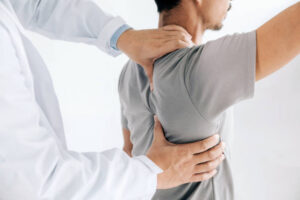
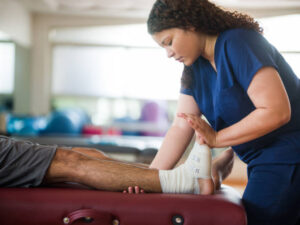
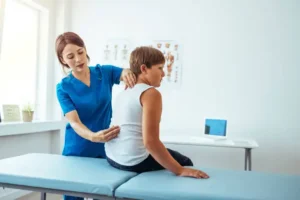
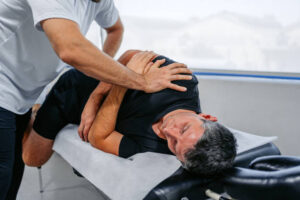
At Lacey Accident & Injury Rehabilitation, we look at the movement involved and ask how the restriction affects daily life. An assessment may include checking hip movement and considering whether the knees or ankles contribute to the difficulty.
The aim is to understand what’s limiting the position before discussing care. Our Poor Flexibility service page provides more information about this area of care.
Difficulty sitting cross-legged doesn’t have to become a problem you keep testing every few days. If the position has become harder than it used to be, or other movements are starting to feel restricted, it’s worth finding out why before trying to stretch your way through it.